
Nephrology
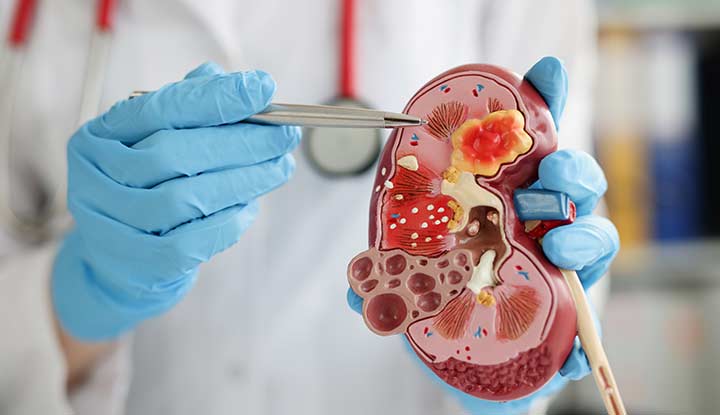
A leading centre in the region, providing comprehensive kidney disease management, the nephrology department is dedicated to the highest standards of patient care with the human touch.
Our team of dedicated, qualified and experienced nephrologists, provide, cutting edge care for all types of kidney disease –Acute Kidney Injury (Acute Renal Failure), chronic kidney disease (CKD) (Chronic Renal Failure), Renovascular or difficult to treat Hypertension, Nephritic Syndromes, Nephrotic Syndromes, Electrolyte disturbances and End Stage Kidney Disease.
Special focus is given to educating patients with CKD to delay progression, along with optimised diet and usingup-to-date, evidence-based medicines, to delay progression to End Stage Kidney Disease.
The scope of services the department provides:
- Clinical Nephrology – Regular Out Patient and Inpatient Consultation
- Critical Care Nephrology
- Kidney Biopsy – Real-TimeUltrasound-guided
- Temporary and tunnelled (Permcath) dialysis catheter placement
- Haemodialysis
- Emergency Dialysis 24 hrs
- SLED
- CRRT –for critical Patients
- Peritoneal Dialysis (CAPD, APD)
- Plasmapheresis
- Hemoperfusion techniques – for poisonings/ intoxications
- Kidney Transplant Evaluation
- Post Kidney Transplant Care
We offer cutting-edge care in all areas of nephrology with round-the-clock delivery of care for kidney patients.
Kidney Biopsy: Accurate treatment depends on accurate diagnosis. A kidney biopsy usually provides the most accurate diagnosis. Our team regularly performs real-time ultrasound-guided biopsies for both native kidneys and transplanted kidneys, with the aim of providing precise care.Already considered relatively safe, using automated needles with real-time guidance makes the procedures even safer. The sample obtained undergoes light microscopy (LM), immunofluorescence (IF) and electron microscopy (EM) studies as needed.
Continuous Renal Replacement Therapy (CRRT): Highly sophisticated dialysis modalities for critically ill patients in ICU/ICCU with multi-organ failure, where routine haemodialysis or peritoneal dialysis are not possible for various reasons.
Various procedures done with this technique are:
- SCUF (Slow Continuous Ultrafiltration)
- CVVH (Continuous Veno-Venous hemofiltration)
- CVVHD (Continuous Veno-Venous haemodialysis)
- CVVHDF (Continuous Veno-Venous hemodiafiltration)
What Are Some Common Symptoms Of Nephrology?
The symptoms of kidney disease may vary depending on the underlying condition. However, some of the most common symptoms include the following –
- Fatigue
- Swelling in the hands, feet, or ankles
- Back pain, especially in the area around the kidneys
- Blood in the urine
- Reduced sense of taste and appetite
- Less energy and trouble concentrating
- Unexplained confusion, memory problems, or trouble focusing
- Pain, fluid in the joints, or stiffness
- Muscle cramps, numbness, or weakness
- Exhaustion during the day
- Problems sleeping at night
- Blood in the urine (hematuria)
- Changes in urination frequency or color
- Nausea and vomiting
- High blood pressure
- Loss of appetite
- Itching and dry skin
- Shortness of breathHow Are Nephrology Disorders Diagnosed?
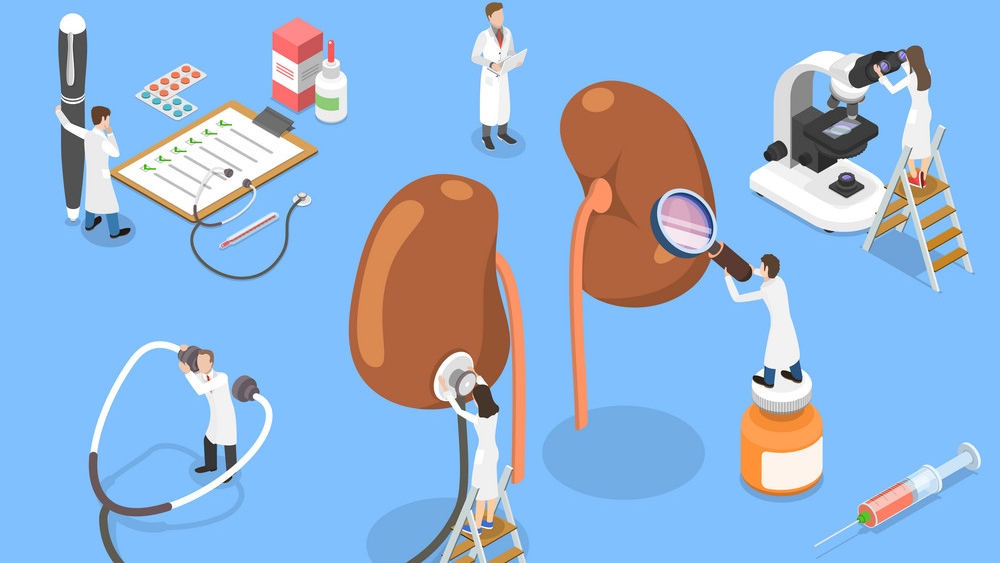
The diagnosis of kidney disease involves various tests and procedures to assess the kidneys’ function and identify the underlying cause of the disease. After analyzing the symptoms and checking the medical history report, the doctor may recommend a series of diagnostic tests to pinpoint the area of disease –
- Imaging tests – These tests, such as ultrasound, CT scan, or MRI, can help identify abnormalities or damage to the kidneys.
- Urine tests – These tests can assess the levels of protein, blood, and other substances in the urine, which can indicate kidney damage or disease.
- Blood tests – These tests can assess the levels of waste products like creatinine and urea in the blood, which can indicate how well the kidneys are functioning.
- Kidney biopsy – In some cases, a small sample of kidney tissue may be removed for further examination under a microscope.
How Are Nephrology Disorders Treated?
There are several treatment methods that can either treat the condition or help you manage the symptoms which can allow you to carry out your daily tasks. The treatment for kidney disease depends on the underlying condition and the stage of the disease. Some of the common treatments include –
- Medications
- Lifestyle modifications
- Continuous Renal Replacement Therapy (CRRT)
- Peritoneal Dialysis (CPD)
- Plasma Dialysis (Plasmapheresis)
- Liver Dialysis (MARS Therapy)
- Kidney Transplant
- Combined Kidney & Liver Transplant and Kidney Biopsy
Conclusion:
Nephrology focuses on the diagnosis and treatment of kidney diseases. The kidneys are responsible for filtering waste products from the blood and removing them from the body through urine. There are several symptoms that can indicate improper functioning of the kidneys. When the kidneys do not function properly, waste products accumulate in the blood, resulting in severe health problems. Therefore, getting a comprehensive diagnosis can lead to effective treatment and a better quality of life.

Dr. Sunil Javale
Nephrologist